
City Guide · Gaston County, NC
Living in Mount Holly, North Carolina
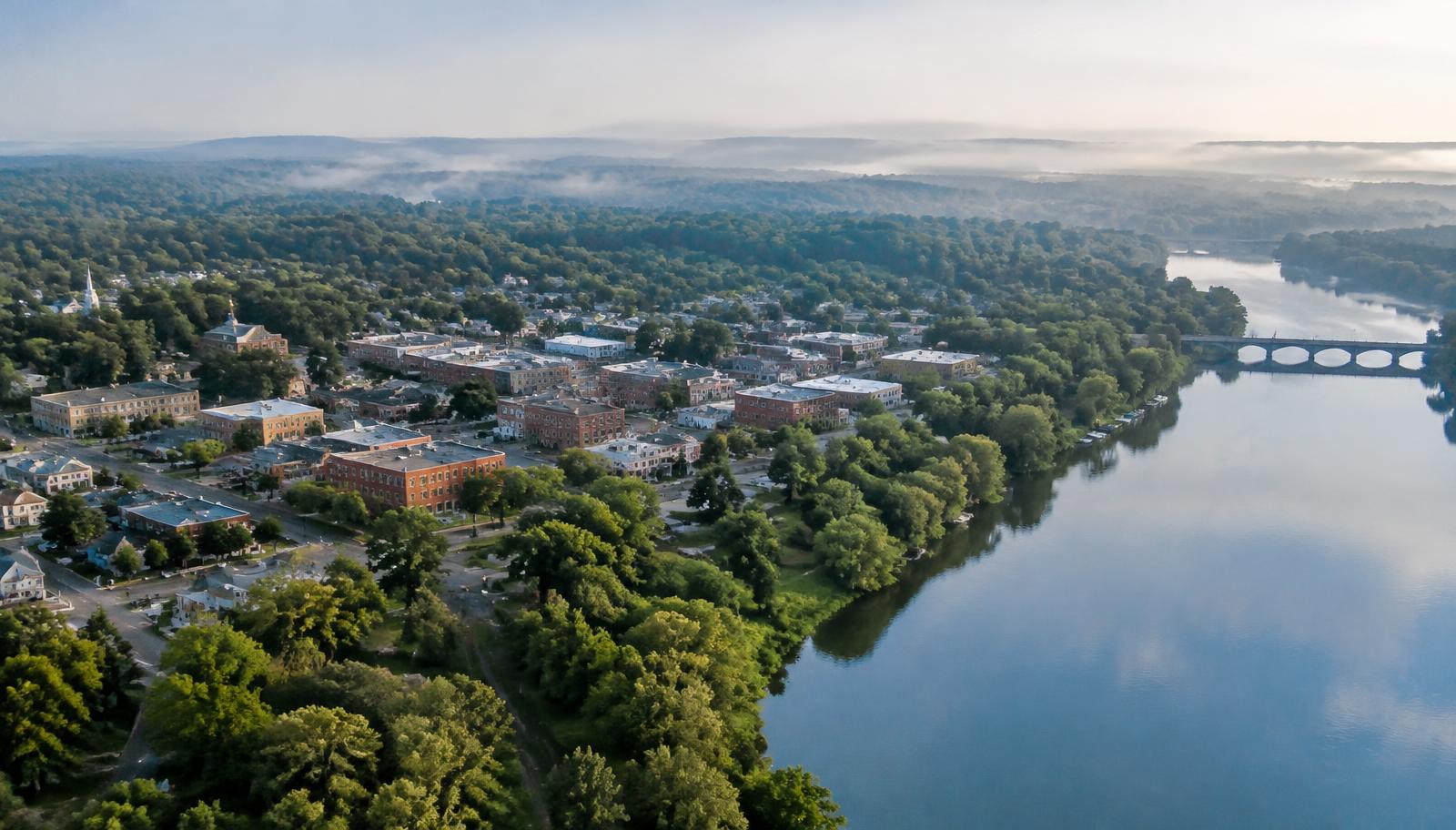
Mount Holly is its own city in eastern Gaston County, set on the west bank of the Catawba River across from Mecklenburg County. This guide explains how the city fits together — and which questions only an exact address can answer.
Last reviewed October 2026 · Mount Holly Living Editors
Understanding Mount Holly
Mount Holly is an incorporated municipality with its own city government, not a neighborhood of Charlotte. That distinction matters in practical ways: who issues building permits, who provides water and sewer, who collects trash, and which taxes apply.
This is Mount Holly, North Carolina. Other places share the name — most notably Mount Holly, New Jersey — and search results, photographs, and data sometimes mix them up. Everything on this site refers to the North Carolina city.
City limits and mailing addresses
The U.S. Postal Service assigns mailing names for delivery, not for municipal jurisdiction. Many properties with a “Mount Holly, NC” address are in unincorporated Gaston County. Others inside the city may share ZIP codes with surrounding areas.
To confirm jurisdiction, use Gaston County’s official GIS parcel tools and the City of Mount Holly. Jurisdiction affects zoning, permits, utilities, and taxes. Confirm with the responsible authority before relying on it for a decision.
Downtown
Downtown Mount Holly is a compact grid of older commercial buildings, local restaurants, shops, and civic spaces. It is the most walkable part of the city — but that compact street network does not mean every Mount Holly neighborhood is walkable to it. Most residents reach downtown by car or bike.
History
Like many Piedmont towns along the Catawba, Mount Holly’s growth is tied to river power and the textile era. We are building a sourced history guide using city records and credible historical organizations; we do not publish dates or attributions we have not verified.
Residential settings and housing variety
Housing ranges from established homes on older streets near downtown, to subdivisions of different eras, to newer construction and townhomes, to acreage and land outside city limits. A small number of properties sit on the river or on Mountain Island Lake; most do not.
Value here means comparing price, condition, lot, maintenance, transportation, services, and the amenities you actually want — not a single headline number.
Riverfront context
The Catawba River forms Mount Holly’s eastern edge. Public riverfront access is limited to specific, verified sites. Much of the shoreline is private, and “riverfront” should only describe a property with actual frontage.
Mountain Island Lake connections
Mountain Island Lake is a reservoir on the Catawba River upstream (north) of Mount Holly. It is a different lake from Lake Wylie, which lies downstream. Lake-oriented communities near Mount Holly — including Stonewater — relate to Mountain Island Lake, and shoreline rules should be researched for that specific lake.
Stonewater
Stonewater is a residential community associated with Mountain Island Lake. Homes vary: some parcels have lake frontage, many do not, and boat-slip arrangements must be confirmed through current association documents. See our Stonewater guide for the questions to ask.
Public parks and trails
The city maintains parks and greenway segments. We list only open, verified routes and clearly separate planned or funded connections from trails you can walk today.
Nearby Whitewater Center
The U.S. National Whitewater Center is a nearby regional destination across the river in Charlotte (Mecklenburg County). It is not inside Mount Holly. Reach it by road from an actual starting point; do not assume a pedestrian route across the river.
Dining and shopping
Downtown holds most of Mount Holly’s independent dining and retail. Our directory publishes businesses only after we verify their address, status, and official website.
Schools and services
Public schools are operated by Gaston County Schools. Assignments are address-specific; use the district’s official school locator. Utilities differ inside and outside city limits — some properties have city water and sewer, others rely on wells or septic systems.
Transportation
Mount Holly connects to Charlotte by road via river crossings and to Interstate 85. Drive times to Uptown and to Charlotte Douglas International Airport vary by origin, time of day, and route. There is no direct passenger rail service to Mount Holly.
Property research checklist
- Confirm county and municipality on the official parcel record
- Confirm recorded subdivision and any HOA
- Confirm water, sewer or septic, and trash service
- Confirm school assignment with the district locator
- Order a survey; review title, easements, and restrictions
- For water properties: confirm frontage, dock permits, and slip documents
- Check FEMA flood mapping
- Test your actual commute at the hours you travel
Official resources
- City of Mount Holly — municipal services, permits, parks
- Gaston County — GIS, property records, planning
- Gaston County Schools — school assignment locator
- Duke Energy — lake shoreline management for its Catawba River reservoirs
- FEMA Flood Map Service Center
Frequently asked questions
Is Mount Holly part of Charlotte? No. It is a separate city in Gaston County.
Does a Mount Holly address mean the home is in the city? Not necessarily. Check the parcel record.
Is Stonewater on Lake Wylie? No. It is associated with Mountain Island Lake.
Is the Whitewater Center in Mount Holly? No. It is nearby in Charlotte.
Planning Home Improvements and Property Uses in Mount Holly, NC
Before choosing a Mount Holly property for an addition, detached workshop, home business, or other intended use, ask the responsible planning office how the applicable zoning rules treat that activity. For properties under city jurisdiction, consult City of Mount Holly planning with the parcel identification and a clear description of your proposal. Ask about setbacks, lot coverage, accessory structures, parking, and any additional approvals rather than assuming neighboring properties establish what is permitted.
An existing structure or advertised feature should prompt questions about its approval history, not an assumption that future changes will be allowed. Ask the responsible permitting office which records are available for additions, enclosed spaces, and changes of use. Separately, review recorded restrictions through the Gaston County Register of Deeds and any applicable HOA documents. Municipal permission and private restrictions address different requirements; verify both before committing to improvements or relying on a particular use.
Checking Drainage and Yard Conditions Before Moving to Mount Holly, NC
Drainage deserves a separate review from mapped flood exposure when evaluating a Mount Holly home. During a property visit, look for sloping ground toward the foundation, downspouts discharging near walls, erosion, and low areas where water could collect. These observations are starting points for questions, not proof of a defect or a guarantee of acceptable conditions. Ask the seller about recurring water problems and consult the responsible local office about available drainage records.
Use Gaston County GIS to orient your review, then ask City of Mount Holly planning or utilities, as appropriate, which office can explain drainage infrastructure and maintenance responsibilities for the parcel. Review recorded plats and easements through the Register of Deeds for drainage areas that could affect fences, landscaping, or sheds. If an HOA is involved, check its recorded documents for maintenance obligations. Do not assume a ditch, pipe, or basin is maintained by the city.
Understanding Street Maintenance and Vehicle Access in Mount Holly Neighborhoods
When comparing Mount Holly neighborhoods, investigate who maintains the street and what rights provide access to the property. A paved road or familiar street sign does not resolve whether maintenance belongs to the city, NCDOT, or a private party. Ask the City of Mount Holly and NCDOT to confirm the relevant road status. For private access, consult recorded plats, easements, and maintenance agreements through the Gaston County Register of Deeds rather than relying on informal assurances.
If your plans involve changing a driveway, adding an entrance, or accommodating different vehicles, ask the responsible road authority about access approval before designing the work. Check whether recorded access agreements or HOA restrictions affect shared driveways, parking, or vehicle storage. For possible road changes nearby, consult NCDOT and the responsible planning office directly, asking how to distinguish adopted plans from proposals. Neither a map annotation nor a neighbor's account establishes what will actually be built.
Frequently asked questions
Can I run a business from my home in Mount Holly, NC?
Ask the responsible planning office how home occupation rules apply to your proposed activity and exact parcel. Describe customer visits, deliveries, signage, parking, and any work outside the home. Review applicable recorded restrictions and HOA documents separately. Do not treat zoning permission as confirmation that private restrictions also allow the business.
Do I need a permit to build a fence in Mount Holly, NC?
Verify requirements with the planning and permitting office responsible for your property before installing a fence. Ask about placement, height, visibility near road entrances, and drainage easements. Review recorded restrictions and any HOA approval requirements as well. A neighboring fence is not reliable evidence of what your property is allowed to have.
How do I find HOA rules for a Mount Holly home?
Search the Gaston County Register of Deeds for declarations, amendments, and other recorded documents tied to the parcel or subdivision. Ask the association for its current governing documents and approval procedures, then clarify how those materials relate to the recorded restrictions. Do not rely solely on a seller's summary or marketing description.
Who maintains the road in front of my Mount Holly home?
Ask the City of Mount Holly and NCDOT to verify maintenance responsibility for the specific street segment. If it is privately maintained, review recorded access and maintenance agreements through the Gaston County Register of Deeds and applicable HOA documents. Public use, pavement, and street signs alone do not establish who must maintain it.
These answers are general guidance. Confirm specifics with the responsible authority before relying on them.